
Can Metal Detectors Detect Gold? How Frequency and Mineralization Affect Detection
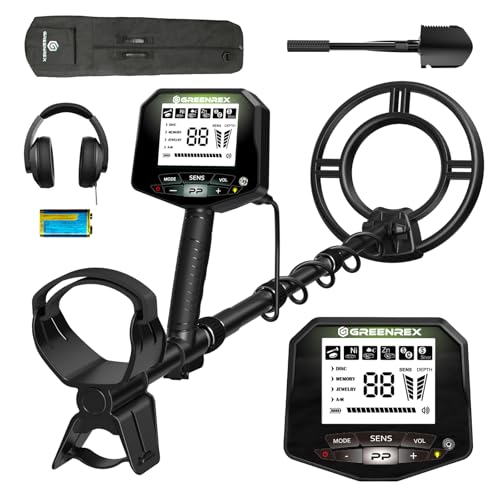
Gold prospecting with metal detectors has evolved dramatically as detector technology advances in 2026. While all metal detectors respond to gold’s conductivity, their ability to locate small nuggets in mineralized ground depends heavily on operating frequency and ground-balancing capabilities. Understanding these technical factors separates successful prospectors from those who struggle to find targets.
The question isn’t simply whether detectors can find gold—it’s which technologies work best for specific conditions and target sizes. Our team has tested dozens of detectors across various goldfields, and the differences in performance between low-frequency coin detectors and specialized gold machines are striking. Soil composition, nugget mass, and detector frequency create a complex equation that determines success rates in the field.
The Physics Behind Gold Detection
Metal detectors locate gold by generating electromagnetic fields that induce eddy currents in conductive targets. Gold’s excellent conductivity makes it theoretically easy to detect, but its low magnetic permeability means detectors must rely purely on conductivity signals rather than ferrous responses. This physical property explains why gold detection requires different approaches than finding iron-based objects.
The detector’s coil transmits an electromagnetic pulse into the ground, and when this field encounters gold, it creates secondary magnetic fields that the receive coil detects. The strength of this return signal depends on the target’s mass, shape, depth, and the surrounding soil matrix. understanding metal detector operating principles reveals why frequency selection matters so much for small gold detection.
Gold nuggets present unique challenges because natural specimens are often small, irregularly shaped, and buried in highly mineralized soils containing iron oxides and magnetic minerals. These ground minerals create background noise that can mask the faint signals from small gold pieces. Advanced detectors use sophisticated ground-balancing circuits to filter out mineralization signals while preserving target responses.
How Operating Frequency Affects Gold Sensitivity
Operating frequency represents the number of electromagnetic pulses a detector transmits per second, measured in kilohertz (kHz). Higher frequencies generate stronger responses from small, low-conductive targets like gold nuggets, while lower frequencies penetrate deeper but sacrifice sensitivity to tiny objects. The relationship between frequency and gold detection isn’t linear—it’s a trade-off between depth and small-target sensitivity.
Detectors operating between 18-45 kHz offer balanced performance for general prospecting, detecting nuggets from sub-gram size down to reasonable depths. Units running at 45-70 kHz excel at finding tiny gold pieces weighing less than 0.1 grams but sacrifice maximum depth. Multi-frequency detectors simultaneously transmit multiple frequencies, combining the depth advantages of lower frequencies with the small-gold sensitivity of higher ones.
Low-frequency detectors (3-7 kHz) common in coin hunting machines struggle with gold smaller than 1-2 grams because their electromagnetic pulses don’t interact efficiently with small, low-conductive targets. This frequency range works for larger nuggets or jewelry but misses the fine gold that constitutes most natural finds. Prospectors serious about finding small gold nuggets typically choose detectors with operating frequencies above 15 kHz.
Ground Mineralization and Its Impact on Detection
Soil mineralization refers to the concentration of iron oxides, magnetic minerals, and conductive salts in the ground matrix. Heavily mineralized soils generate strong electromagnetic responses that overwhelm signals from small gold targets, creating a noise floor that limits detection depth and sensitivity. Understanding your hunting environment’s mineralization level determines which detector technology will succeed.
Hot rocks—individual stones with extreme mineral concentrations—produce signals that mimic metal targets, creating false signals that frustrate prospectors. Modern gold detectors employ ground-balancing circuits that measure the average soil response and filter it from the target signal. Manual ground balance gives experienced users precise control, while automatic systems continuously adjust as soil conditions change during detecting.
Salt mineralization presents different challenges than magnetic mineralization, particularly in desert regions and ancient beach deposits. Conductive salts interfere with very low frequency (VLF) detectors differently than magnetic minerals, requiring specific ground-balancing approaches. Some soil conditions combine both magnetic and conductive mineralization, demanding detectors with dual ground-balancing capabilities to maintain stable operation.
VLF Versus Pulse Induction Technology for Gold
Very Low Frequency (VLF) detectors dominate the gold prospecting market because their high operating frequencies and excellent ground-balancing provide superior sensitivity to small nuggets. VLF units can discriminate between target types and adjust to varying ground conditions, making them versatile tools for prospecting across different terrains. Their limitation appears in extremely mineralized ground where even advanced ground-balancing struggles to eliminate all background noise.
Pulse Induction (PI) detectors ignore ground mineralization by transmitting powerful electromagnetic pulses and measuring the decay time of target responses. This approach allows PI units to operate in heavily mineralized soils that render VLF detectors nearly useless, penetrating deeper than comparable VLF machines. The trade-off is reduced sensitivity to very small gold and inability to discriminate ferrous trash, meaning PI users dig more junk targets.
Choosing between technologies depends on your target environment and typical nugget sizes. VLF detectors excel in mildly to moderately mineralized ground with smaller gold, while PI units dominate in extreme mineralization where depth matters more than discriminating tiny targets. Some prospectors carry both types, selecting the appropriate tool based on ground conditions and whether they’re searching known nugget patches or exploring new ground.
Common Gold Target Types and Detection Challenges
Each gold target type presents distinct detection challenges based on size, shape, and how the electromagnetic field interacts with its geometry. Thin, flat pieces like hammered gold or small chains produce weaker signals than spherical nuggets of identical mass because their surface area orientation affects eddy current generation. Understanding these differences helps set realistic expectations for what your detector can find.
Optimizing Detector Settings for Gold Detection
Ground balancing represents the most critical setting adjustment for gold detection in mineralized soils. Manually ground-balancing involves pumping the coil over undisturbed ground while adjusting a control until the detector produces minimal response to soil. Tracking ground balance continuously adjusts as you sweep, beneficial when mineralization levels vary across your search area but potentially unstable over targets.
Sensitivity controls the detector’s gain, amplifying both target signals and ground noise. Maximum sensitivity doesn’t always yield best results—excessively high settings in mineralized ground create instability and false signals that mask real targets. Finding the threshold where the detector operates quietly but still responds to small test targets maximizes effective depth and small-gold sensitivity for prevailing conditions.
Discrimination circuits filter unwanted targets by analyzing signal characteristics, but aggressive discrimination on gold detectors risks rejecting small nuggets that produce marginal signals. Most successful prospectors run minimal discrimination, accepting that they’ll dig more trash targets in exchange for not missing faint gold signals. Detailed metal detecting guides explain how different settings interact and affect field performance across various soil types.
Detector Specifications Comparison for Gold Prospecting
These specifications reveal the performance trade-offs between detector categories and price points. Budget VLF detectors suit prospectors in areas with larger gold and moderate mineralization, while high-end VLF units justify their cost through superior small-target sensitivity and advanced ground-balancing in challenging soils. Pulse induction machines occupy a specialized niche where extreme mineralization or maximum depth takes priority over small-gold sensitivity and trash discrimination.
| Specification | Budget VLF | High-End VLF | Pulse Induction |
|---|---|---|---|
| Operating Frequency | 15-20 kHz | 40-60 kHz (or multi) | Not applicable |
| Minimum Gold Size | 0.5-1.0 grams | 0.05-0.1 grams | 0.3-0.5 grams |
| Maximum Depth (large nugget) | 8-12 inches | 10-16 inches | 18-36 inches |
| Ground Balance Type | Preset/Manual | Auto/Manual/Tracking | Not required |
| Mineralization Handling | Mild to moderate | Moderate to heavy | Extreme |
| Discrimination Capability | Basic | Advanced multi-tone | None or minimal |
| Typical Price Range (2026) | $300-$600 | $900-$2,500 | $1,500-$6,000 |
Real-World Gold Detection Scenarios
Desert goldfields in Arizona and Nevada present heavily mineralized soils with abundant hot rocks, conditions where high-frequency VLF detectors with excellent ground-balancing or PI units prove necessary. Prospectors working these areas routinely find sub-gram nuggets with 45+ kHz VLF machines, while PI users target deeper specimens that VLF detectors can’t reach through the extreme mineralization. The choice between technologies often depends on whether known patches are being re-worked or virgin ground is being explored.
Australian goldfields combine some of the world’s most challenging soil conditions with the potential for large nuggets, making PI detectors extremely popular despite their limitations with small gold. The red, iron-rich soils overwhelm many VLF detectors, but the possibility of multi-ounce specimens justifies the trade-off in small-target sensitivity. Many Australian prospectors use high-frequency VLF detectors for patch hunting and switch to PI units for deeper exploration.
Eastern U.S. streams and historic mining districts typically feature milder mineralization where moderate-frequency VLF detectors excel at finding both natural nuggets and lost gold jewelry. These environments allow successful detecting with more affordable machines, though small flour gold in black sand concentrations still challenges even quality detectors. Beach hunting for gold jewelry demands detectors with salt mineralization rejection capabilities that differ from inland prospecting requirements.
Mountainous Terrain Challenges
Steep slopes and bedrock outcrops limit coil-to-ground geometry, reducing effective depth. Smaller coils improve maneuverability but sacrifice depth and coverage area in these conditions.
Dry Washing Area Detection
Previously worked dry wash materials contain fine gold that escaped earlier recovery efforts. High-frequency detectors find these tiny pieces that represent significant accumulated value despite individual target size.